Shin splints are pain along the front of the lower leg, usually brought on by running or other repeated impact, and for most people they settle with rest and a gradual return to activity. The important qualification is that not all lower-leg pain in a runner is shin splints. A stress fracture of the tibia can feel similar at first, and it needs a different course of action, which is why the diagnosis matters and why persistent pain deserves a clinician's attention.
The term itself is informal. In clinical writing the condition is called medial tibial stress syndrome, named for the inner border of the tibia, the larger of the two bones in the leg below the knee. As Oxford Learner's Dictionaries notes, the shin is "the front part of the leg below the knee" — the exact area where this pain collects. The name describes a location and a pattern of overload, not a single injury with one clear mechanism, and that uncertainty shapes both how doctors diagnose it and how they treat it.
What are shin splints, and what causes them?
Shin splints are an overuse injury: pain along the inner edge of the shinbone that appears during or after repetitive weight-bearing exercise. The prevailing explanation is that repeated loading stresses the bone and the soft tissues that attach to it faster than the body can adapt. Bone is living tissue that remodels in response to strain, but the remodeling lags behind sudden increases in workload. When the demand outpaces the repair, pain follows.
The typical story involves a change, not a baseline. A person who starts a running program after years off, switches to a harder surface, adds hills, or sharply increases weekly mileage is the classic candidate. Dancers, military recruits, and court-sport athletes run into the same problem for the same reason: a rapid jump in repetitive impact on legs that have not been conditioned for it. The pain usually begins diffusely, spread along a stretch of the shin rather than concentrated at one point, and it often eases when the activity stops.
That diffuse pattern is one of the more useful clues available without any test at all. Pain from a stress fracture tends to be more focal — a person can often point to a spot the size of a fingertip — and it tends to worsen the longer the activity continues rather than easing off. Neither pattern is definitive on its own, but the difference gives both the runner and the clinician a starting point.
How do doctors diagnose shin splints?
Diagnosis starts with a history and a physical examination, not imaging. A clinician will ask what changed in the training, where exactly the pain sits, when it appears during a run, and whether it hurts at rest or at night. Palpation — pressing along the shin with the fingertips — helps distinguish the broad tenderness of medial tibial stress syndrome from the pinpoint tenderness of a stress fracture. The examination also looks for other mimics, including compartment problems and tendon irritation, which produce different patterns of pain and tightness.
Imaging enters the picture when the story or the examination raises doubt. Plain X-rays are often the first step, but early stress fractures can be invisible on X-ray for weeks, so a normal film does not rule one out. When the suspicion remains high, clinicians may turn to MRI, which is more sensitive for detecting both stress reactions and early fractures. The practical sequence is straightforward: conservative diagnosis first, imaging when the picture is unclear or when rest has failed to resolve the pain on the expected timeline.
There is an honest limitation worth naming. Because shin splints are defined by symptoms and location rather than a single measurable finding, two clinicians examining the same leg can reasonably reach different conclusions about severity. The diagnosis is a working judgment, refined over time by how the leg responds to reduced loading.
What does recovery actually involve?
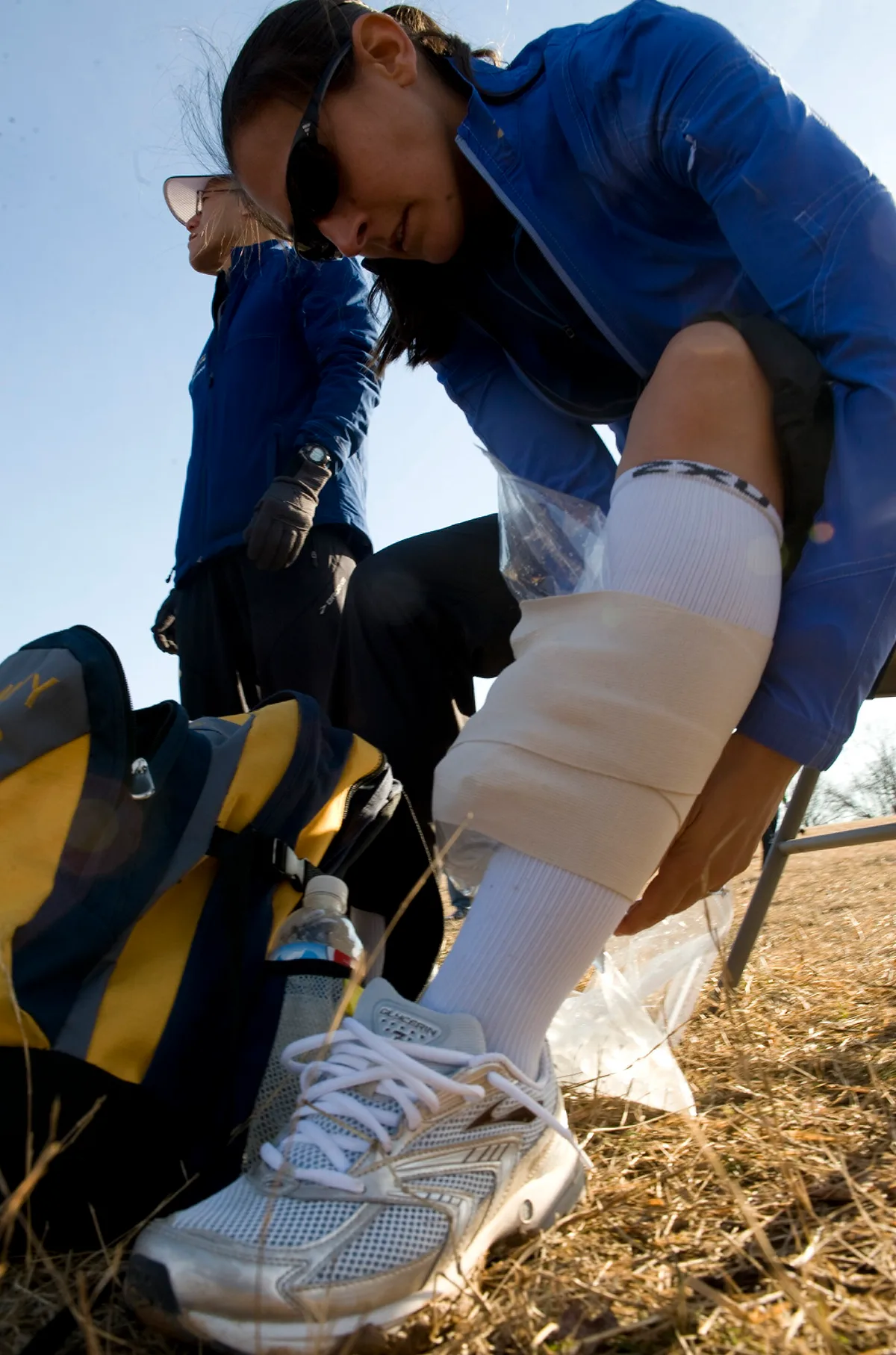
The foundation of recovery is relative rest — reducing or removing the activity that provokes the pain while staying generally active in ways that do not hurt. Swimming and cycling are common substitutes because they keep conditioning going without repeated impact on the shin. Ice and simple over-the-counter pain relief may ease symptoms in the short term, though neither addresses the underlying overload. As symptoms settle, activity is reintroduced gradually, with the general principle being small, progressive increases rather than a return to the previous full workload all at once.
Longer-term prevention leans on the same logic that produced the injury in reverse: slower build-ups, attention to footwear and running surfaces, and strengthening work for the lower legs and hips. Readers interested in the broader evidence on supporting tissue through training can find relevant context in Strength Training for Runners: What the Research Says It Buys, and the question of how much recovery time different tissues need is covered in How Many Rest Days Do Muscles Need? The Recovery Timeline, Explained. Stretching habits are examined separately in Stretching Before or After a Workout? What the Evidence Supports — the evidence there is more mixed than most runners assume. We covered a connected angle in How Many Rest Days Do Muscles Need? The Recovery Timeline, Explained.
What recovery does not involve is pushing through the pain to test it. Repeatedly loading a stressed tibia risks converting a stress reaction into a full stress fracture, which moves the timeline from weeks to months. The distinction between soreness that eases as the run continues and pain that sharpens with every stride is worth taking seriously from the first appearance.
When is rest not enough?
Rest stops being the right answer at several clear points. One is pain that persists despite several weeks of genuinely reduced activity — not a week of partial rest between hard sessions, but a real reduction in loading. Another is pain that is focal rather than diffuse, or pain that occurs at rest or at night, both of which raise the possibility of a stress fracture. Pain that returns immediately and sharply on resuming activity, after a period of improvement, also warrants a clinical review rather than another cycle of self-management.
What this means in practice is that the escalation decision is less about a fixed number of days and more about the trajectory. Improving pain supports continued conservative care. Static or worsening pain after honest rest changes the calculus and justifies imaging or a referral to a sports medicine specialist. A clinician can also check for the less common but more urgent causes of lower-leg pain — such as problems with blood flow or nerve compression — which present differently and need different handling entirely.
There is a broader pattern here that recurs across sports medicine: the body signals overload before it signals injury, and the signals are easy to misread in the enthusiasm of a new training block. The same principle appears in Overtraining Syndrome: The Warning Signs Athletes Miss, where the earliest warnings are subtle and easy to dismiss. With shin splints, the cost of misreading them is usually a longer layoff than the early rest would have been.
When to see a doctor
Anyone with lower-leg pain that follows the patterns described above — persistent despite rest, focal, present at night, or worsening on return to activity — should book a routine appointment with a primary care clinician or a sports medicine provider. Urgent evaluation is warranted for pain that follows a specific injury or fall, pain with an obvious deformity, a leg that looks pale, cold, numb, or swollen in an unusual way, or pain so severe that walking is not possible. These can indicate problems well beyond overuse, and they should not wait.
Useful questions to bring to the appointment include: "Could this be a stress fracture rather than shin splints?" and "What activity level is safe while this settles?" and "At what point should imaging be considered?" Each gives the clinician a chance to explain the reasoning rather than simply issue a rest order, and each reflects the genuine uncertainty built into this diagnosis.
One closing note on scope: this article is general information, not medical advice, and no published guide can examine a leg. A clinician who can palpate the shin, watch the person walk, and track the pain over time will reach a far better-grounded conclusion than any article can.