
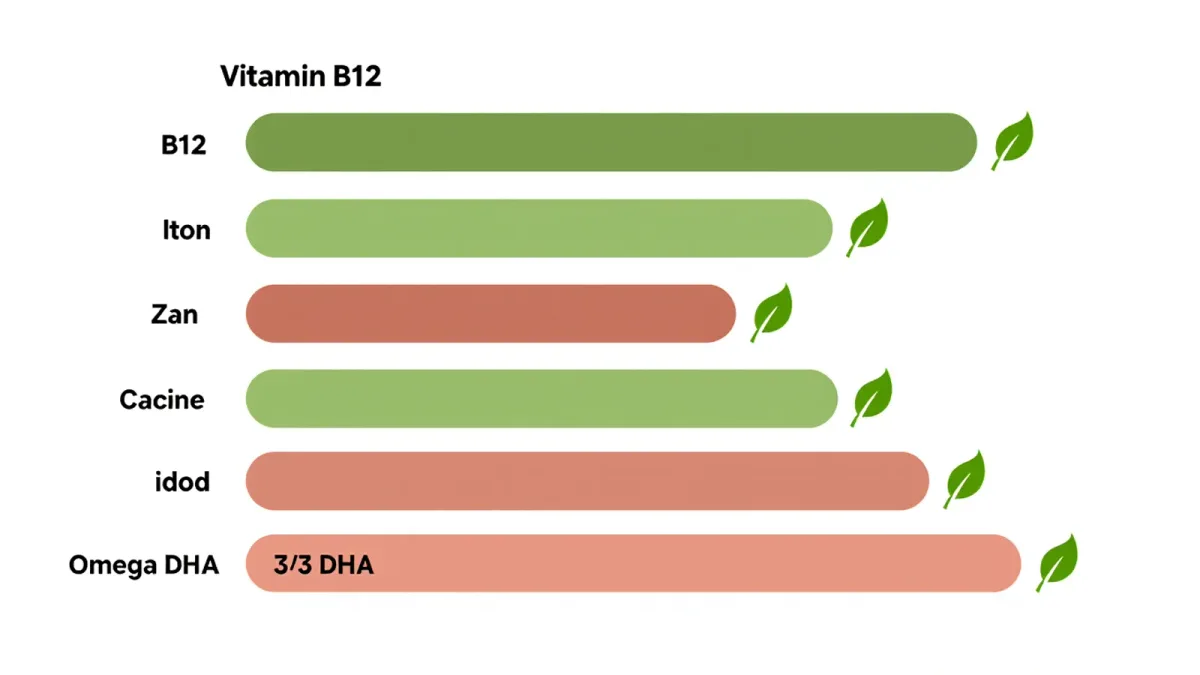
Well-planned vegan and vegetarian diets can meet adult nutritional needs at every life stage — the Academy of Nutrition and Dietetics' 2016 position paper states as much — but research on people who follow them identifies a short list of nutrients at genuine risk: a 2020 systematic review in Nutrients found vegans showed lower intakes and blood levels of vitamin B12, vitamin D, iron, zinc, iodine, calcium, and the long-chain omega-3 fats EPA and DHA compared with omnivores, with B12 deficiency the single most predictable gap because reliable plant sources essentially do not exist without fortification or supplements.
Newspaper Daily publishes information, not medical advice. Nutrient requirements shift with pregnancy, childhood, older age, and medical conditions, and anyone adopting or maintaining a plant-exclusive diet — particularly during pregnancy — should work with a physician or registered dietitian and consider periodic blood testing rather than relying on symptoms.
What does "well-planned" actually mean?
The Academy's position paper and the Dietary Guidelines for Americans use the qualifier deliberately: adequacy depends on deliberate food choices and, for some nutrients, fortified foods or supplements. Federal guidance lists a fortified-soy-beverage pattern as an acceptable dairy alternative and counts legumes, tofu, nuts, and seeds within the protein group. The distinction matters because large observational cohorts — including the EPIC-Oxford study of about 48,000 British adults, published in 2019 — found vegetarians and especially vegans had lower average BMI and lower diabetes risk than meat eaters, but also measurably different micronutrient status. Planning is what separates the two columns.
Which nutrients are the real gaps?
Based on the 2020 Nutrients review, EPIC-Oxford findings, and Academy guidance, the evidence-supported watch list includes:
- Vitamin B12: no reliable unfortified plant source; deficiency causes megaloblastic anemia and irreversible neurological damage over years
- Iron: plant (non-heme) iron is absorbed at 2 to 20 times lower rates than heme iron, and vegetarians' stores run lower, though outright anemia rates in cohorts are only modestly elevated
- Zinc: phytates in whole grains and legumes inhibit absorption; the Dietary Guidelines note vegetarians may need up to 50 percent more zinc
- Calcium and vitamin D: bone-fracture data from EPIC-Oxford found vegans had roughly 2.3 times the hip-fracture rate of omnivores, concentrated in those with low calcium intake
- Iodine: status depends on iodized salt, seaweed, and dairy; both deficiency and excess appear in vegan populations, with seaweed doses wildly variable
- EPA and DHA: the conversion of plant alpha-linolenic acid to these long-chain fats runs below 10 percent, and vegan blood levels are low in most studies
How serious is the B12 situation?
Serious enough that the Academy and vegan-nutrition researchers describe supplementation as the standard of care rather than an option. Deficiency develops slowly because the liver stores years of supply, which means problems surface after 3 to 6 years on an unsupplemented vegan diet. A 2003 study of raw-food vegans and multiple EPIC-Oxford analyses documented elevated homocysteine and depleted B12 status in unsupplemented participants. Neurological damage can progress even without anemia, and high-dose folic acid from plant foods can mask the blood signs while the nerve damage advances — the reason researchers urge testing and supplements instead of symptom-watching.
Is plant iron absorbed badly enough to matter?
It depends on strategy. Non-heme iron absorption is inhibited by phytates, tannins in tea and coffee, and calcium taken with meals, and enhanced several-fold by vitamin C eaten in the same meal — pairing lentils with peppers or citrus roughly triples absorption in feeding studies. The Institute of Medicine's Dietary Reference Intakes set an 80 percent higher iron recommendation for vegetarians precisely because of bioavailability. Cohort data are nuanced: German and British vegetarian cohorts found lower ferritin (stored iron) without large increases in iron-deficiency anemia, and menstruating women carry the highest risk in every population, plant-based or not.
Related stories: Omega-3 Supplements and Heart Health: What Large Trials Show · Sodium Intake Guidelines: How Much Is Too Much?.
Do plant-based eaters really break more bones?
The EPIC-Oxford fracture analysis, published in BMC Medicine in 2020, is the strongest data point: across about 55,000 participants followed for roughly 18 years, vegans had about 43 percent higher total-fracture risk than meat eaters, driven by hip, leg, and vertebral fractures, while fish eaters and vegetarians showed smaller, less consistent elevations. The same team's analysis found the vegan hip-fracture excess largely explained by low BMI and low calcium intake, and a 2021 follow-up suggested participants taking calcium supplements or with higher protein intake fared better. Observational design applies — people choosing vegan diets differ from omnivores in weight, exercise, and health behaviors — but the findings align with calcium and protein physiology.
What about protein itself?
Protein is rarely the problem. EPIC-Oxford found vegans averaged about 60 grams of protein daily against meat eaters' 91 grams — both above the 0.8-gram-per-kilogram RDA for typical body weights. The 2019 follow-up in JAMA Internal Medicine found plant protein intake associated with modestly lower all-cause mortality in US cohorts. Soy, pea, and blended plant proteins support muscle protein synthesis comparably to whey when matched for dose, per a 2019 review in Nutrients, though single doses of some plant proteins produce smaller acute anabolic responses, which researchers attribute to leucine content and digestibility.
Do children and pregnant women need special planning?
Yes, and the Academy's position paper covers both explicitly: well-planned vegetarian and vegan diets are appropriate in pregnancy, lactation, childhood, and adolescence. The planning requirements are concrete — supplemented B12 for the mother and, in vegan families, for breastfed infants; attention to iron, zinc, and vitamin D during weaning; adequate calorie density in toddlers, whose small stomachs fill quickly on high-fiber foods; and iodine through iodized salt or supplements rather than unregulated seaweed. A 2021 Polish study of vegan children found normal growth on average but shorter stature and lower B12 and iron markers in unsupplemented children — the planning caveat made visible.
Can a vegan diet be optimized rather than just adequate?
Nutrition researchers sympathetic to plant-based eating, including the authors of the VeganHealth clinical resources, emphasize that the gaps are all addressable: B12 via supplements of 25 to 100 micrograms daily or 1,000 micrograms twice weekly; algae-derived DHA and EPA capsules as a direct plant-source omega-3; calcium-set tofu, fortified plant milks, and greens for calcium; and vitamin D per general adult guidance. Blood tests every year or two — B12, ferritin, vitamin D — convert guesswork into management.
When to see a doctor or registered dietitian
Professional involvement is warranted during pregnancy and breastfeeding, in infants and children on vegan diets, when fatigue, hair loss, numbness, tingling, or cognitive changes appear — symptoms overlapping several deficiency states; before and during treatment with thyroid medication, since iodine and soy timing interact with levothyroxine; when bone health is a concern or fractures occur; and when diet exclusivity expands, because orthorexic patterns can masquerade as ethical eating. Deficiency confirmed on blood work should be treated with clinician-directed doses, not self-prescribed megadoses.
The bottom line on plant-based nutrient gaps
The research supports the Academy's formulation: plant-based diets can be adequate and healthful, and cohort studies associate them with lower BMI, diabetes, and mortality. The gaps are specific and well-mapped — B12 above all, then iron, zinc, calcium, iodine, vitamin D, and EPA/DHA — and each has a tested remedy. The EPIC-Oxford fracture data show what happens without planning; the supplement and fortification literature shows the fix. As of June 2026, the evidence favors planning over alarm.